|
DRAFT UNESCO STATEMENT
Formal draft of a Statement of Outstanding Universal Value (SOUV) structured in accordance with the official UNESCO
World Heritage Operational Guidelines. This draft establishes the site’s global significance, tests of authenticity and integrity, and requirements for protection.
DRAFT STATEMENT OF OUTSTANDING UNIVERSAL VALUE (SOUV)
Name of Property: The 1896 Herstmonceux Generating Station and Early Micro-Grid
Location: Lime Park, Herstmonceux, East Sussex, United Kingdom
Category: Cultural / Industrial Heritage
BRIEF SYNTHESIS
The 1896 Generating Station at Herstmonceux represents an exceptionally rare and surviving tangible milestone from the dawn of global electrification. Established at the end of the 19th century by Baron von Roemer and
Major Charles de Roemer, the site stands as one of the world’s earliest surviving coal-gas-powered, battery-integrated rural electricity generating stations that transitioned from a private estate supply to a pioneering village micro-utility.
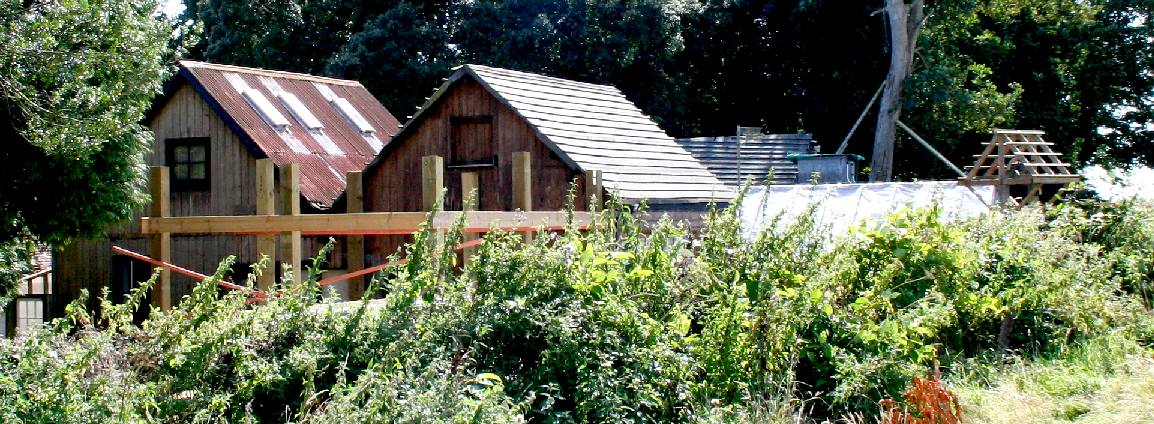
Unlike urban central stations that relied on heavy steam dynamos and brick-and-mortar edifices—most of which have been demolished or stripped for adaptive reuse—Herstmonceux preserves a unique lightweight timber architecture (constructed from imported redwood) explicitly designed to house a small-scale coal-gasification engine, Crompton dynamos, and a dedicated bank of glass-cell lead-acid accumulators.
The site embodies the fundamental technological paradigm shift toward overnight battery load-levelling: running gasification generation during high-demand daytime hours while relying entirely on chemical energy storage for noise-free overnight power supply. It is a preserved physical artifact documenting the transition from localized off-grid energy to public electrification at the rural community level.
CRITERIA UNDER WHICH INSCRIPTION IS PROPOSED
Criterion (ii): Exhibit an important interchange of human values, over a span of time or within a cultural area of the world, on developments in architecture or technology, monumental arts, town-planning or landscape design.
Justification: The Herstmonceux Generating Station illustrates the rapid dissemination and localized adaptation of 19th-century electrical engineering principles pioneered by figures such as R.E.B. Crompton. It demonstrates how high-end urban direct-current (DC) micro-grid technology and accumulator load-levelling were downscaled and successfully applied to rural, off-grid agricultural communities, establishing early blueprints for decentralized public utility networks.
Criterion (iv): Be an outstanding example of a type of building, architectural or technological ensemble or landscape which illustrates a significant stage in human history.
Justification: The property is an outstanding and unique surviving example of a late-19th-century rural power house. While steam and hydroelectric power stations dominate the surviving industrial record, Herstmonceux represents the rare "town gas and battery storage" operational type. Furthermore, its survival as a lightweight, timber-framed utility building—where virtually all contemporary equivalents were built of brick/stone or subsequently destroyed—renders it an indispensable technological ensemble illustrating the second wave of the Industrial Revolution.
STATEMENT OF AUTHENTICITY
The property meets the UNESCO Test of Authenticity through its form, design, materials, and internal spatial legibility:
i) Form and Design: The site retains its original architectural layout, including the dedicated
battery
room, engine house footprint, and sub-floor channel routes for cabling and exhaust.
ii) Materials and Substance: The timber framing (imported redwood), internal match-boarding, and outer corrugated cladding preserve the original 1890s construction methods.
Internal Technological Legibility: Unlike urban sites (e.g., 46 Kensington Court or Battersea Power Station), where conversion has completely gutted internal operational evidence, Herstmonceux retains intact concrete engine foundations, gas-plant footprints, and battery-bank spatial arrangements, directly evidencing the 1890s mechanical and electrical process.
STATEMENT OF INTEGRITY
The property meets the UNESCO Test of Integrity regarding completeness and physical condition:
a) Internal Completeness: The physical shell and internal archaeological foundations form a complete, unbroken record of a 19th-century micro-grid powerhouse. The physical evidence of both generation (engine beds) and storage (battery spaces) remains cohesive within a single structure.
b) External Setting and Contextual Integrity: The relationship between the generating station, Lime Park, and the surrounding rural landscape reflects the original spatial context in which this micro-utility operated.
c) Note on Vulnerability: The visual integrity and setting of the property face threats from modern suburban encroachment and residential developments within its historical setting (such as adjacent housing developments). To preserve the property’s Outstanding Universal Value, strict enforcement of heritage setting protections and buffer zones is vital.
REQUIREMENTS FOR PROTECTION AND MANAGEMENT
- Legal Protection: The property requires the highest level of statutory protection (such as Grade I or Grade II* listing) under national planning legislation to safeguard both its physical fabric and its immediate setting against inappropriate development or demolition.
- Conservation & Management: Ongoing structural conservation must continue using non-destructive, sympathetic techniques—protecting the historic timber frame against damp, rot, and wood-boring insects while maintaining archaeological access to internal engine and battery features.
- Buffer Zone Protection: In line with National Planning Policy Framework (NPPF) guidelines and UNESCO operational standards, a defined buffer zone must be maintained around Lime Park to shield the historic sightlines, rural setting, and contextual legibility of the generating station from cumulative development harm.
OLDEST SURVIVING THERMAL SITE IN THE UK
The generating station situated at Lime Park in Herstmonceux, East Sussex, is a rare surviving structure from the dawn of electrification.
Initiated in the late 1890s (c. 1896–1898) by Baron von Roemer and further expanded by his son, Charles de Roemer, the site was built to power the local estate before expanding to supply DC electricity to the surrounding village.
KEY
HISTORICAL & TECHNICAL FEATURES
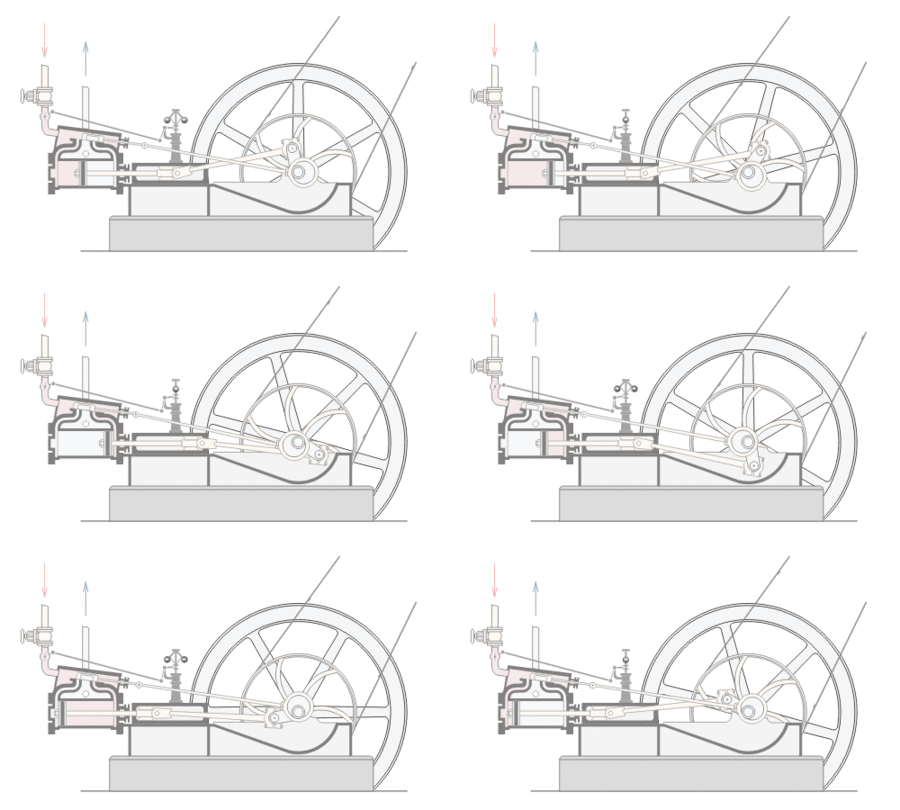
- Coal-to-Gas Generation: The plant utilized a coal-gas system where coal was gasified on-site to run a single-cylinder National gas engine (around 36 horsepower) coupled to a Crompton generator.
-
Early Commercial Battery Load-Levelling: The site housed a large bank of lead-plate glass batteries. By day, the gas engine generated electricity and charged the battery bank; at night, the engine was switched off to eliminate noise, with the batteries maintaining power for street lighting and local homes.
-
Rare Architecture: Unusually for an industrial coal-gas facility, the original structure was built from imported redwood timber rather than brick or stone, match-boarded inside and out. It was later clad in corrugated iron prior to WWII for protection.
- Surviving Physical Record: While earlier pioneer stations like Edison’s Holborn Viaduct (1882) or Pearl Street (1882) were demolished or destroyed, the Herstmonceux powerhouse remains standing. Archaeological surveys (including work by Archaeology South East) have documented its concrete engine beds, battery room footprint, and original timber framework. It stands as arguably the only surviving physical structure of a small-scale, coal-gas-powered rural generating station with integrated battery storage from the 19th century.
What Makes Herstmonceux Unique in a Survey Context
In a wider survey, Herstmonceux occupies a distinct niche compared to these examples:
Construction Material: Virtually all other surviving 19th-century sites were built of brick or local stone. Herstmonceux’s timber-frame design (imported redwood) makes it a rare surviving specimen of wooden industrial engineering.
Coal-Gas to Battery Architecture: Most small-scale survivors are hydro-based. Herstmonceux represents the small-scale coal-to-town-gas engine configuration, paired explicitly with commercial battery storage for rural load-levelling.
Transition to Public Supply: Unlike pure estate setups (Bateman's, Cragside), Herstmonceux began as a private supply and expanded into a village micro-utility.

Establishing the historical significance of the Herstmonceux generating station in a comparative survey, its uniqueness rests on a precise combination of factors:
The Verdict
- 46 Kensington Court is widely recognized as the earliest surviving urban central station building designed around DC battery storage/load-levelling for public supply.
- Herstmonceux remains exceptionally rare—and likely unique—as a surviving timber-built, coal-gas engine station that provided public/village supply using battery load-levelling.
While stone and brick hydro or steam stations like Lynmouth or Powick Mills survived due to their robust construction materials, Herstmonceux's survival as a lightweight, timber-framed utility building from 1896 is an architectural anomaly.
Relevance to Herstmonceux’s Heritage Case
UNESCO’s strict criteria for industrial heritage focus heavily on authenticity and integrity:
a) Intactness Over Conversion: The complete gutting of Kensington Court or Battersea eliminates their potential for top-tier international recognition, as they exist purely as architectural envelopes.
b) Survival of the Mechanism: The value of a site like Herstmonceux in a heritage survey relies on the physical retention of its operational layout—the timber frame, the concrete engine beds, the gas-plant evidence, and the battery room space.
c) Purity of Purpose: Herstmonceux represents a preserved "snapshot" of late-Victorian rural electrification that avoided the modern gutting that claimed urban equivalents.
CHAPTERS
CHARACTERS
SURVEY - UK
& INTERNATIONAL EARLY POWER GENERATING INSTALLATIONS
|
Ames Hydroelectric Generating Plant,
Colorado, USA -
|
1891
|
Operational
- Westinghouse |
|
Batemans,
Burwash, Sussex, Kipling, UK. Hydroelectric water turbine
|
1902
|
Grade I
listed |
|
Battersea Power Station,
London, UK. Completely gutted for flats
|
1933
|
Grade II*
listed |
|
Coldharbour Mill, Devon,
surviving gas engine
-
|
1895
|
Woolen
Mill |
|
Cragside,
UK
- The world’s first hydro-lit home, William Armstrong
|
1880
|
Grade I
listed |
|
Cwm Dyli Hydro Power Station,
Snowdonia, Wales -
|
1878>
|
Operational |
|
Godalming, Surrey, UK,
River Wey -
|
1881
|
Shut down
1884 |
|
Greenwich Power Station,
London, UK, steam
-
|
1906
|
Standby
gas turbine, operational |
|
Holborn Viaduct,
57, London, UK, Thomas Edison
-
|
1882
|
Destroyed,
Blitz |
|
Hulne Park / Alnwick Castle, (Duke) Northumberland - water turbines
|
1889
|
Surviving
stone building |
|
Japan, Meiji,
-1910 coal power structures Hashima Island & Miike
-
|
1890>
|
UNESCO
Inscribed 2015
|
|
Kensington
Court, 46, Queen's Gate, London, W8 -
|
1887
|
Gutted,
Flats, Grade II listed |
|
Laxey Glen, Isle of Man, Snaefell Mountain Railway
-
|
1898
|
Transport
Sheds |
|
Lynmouth
Power Station -
|
1890s
|
Destroyed
1952 flood |
|
Mechanicville Hydroelectric Plant,
New York, USA
-
|
1897
|
Operational |
|
Norway
- Vemork Hydroelectric Power Station, Rjukan–Notodden
|
1911
|
UNESCO
Inscribed
2015 |
|
Pearl Street Station,
Manhattan, New York, USA, September - Edison
|
1882
|
Burned
down 1890 |
|
Powick Mills, Worcester
-
|
1894
|
Residential
Flats |
|
Sandy
Lane Power Station, Coventry, UK - Electric Wharf
|
1895
|
Redeveloped,
ind. & residential |
|
Shiplake
Pumping & Generating Station, Oxfordshire - R. Thames
|
1897
|
Converted
to a School |
|
Sidrapong Hydel Power Station,
Darjeeling, W. Bengal, India, hydro
|
1897
|
Operational |
|
The Milestone: Hudson
River, North America hydroelectric
|
1897
|
Operational |
|
Wallington Hall, Northumberland, Estate ,private by oil/gas engine
|
1890s
|
Surviving
stone building |
|
Waddesdon
Manor, Buckinghamshire, Estate, Ferdinand de Rothschild
|
1889
|
Surviving
stone building |
There
were many other contributors. If
you know of any information that may help us complete this survey, please get in
touch.
|