|
Assessment of Potential Non‑Compliance with the World Heritage Convention (1972)
State Party: United Kingdom of Great Britain and Northern Ireland
Property: Herstmonceux Electricity Generating Works & Battery Energy Storage Utility (Proposed – Energy Technology Category)
1. Executive Summary
This report identifies potential breaches or failures of compliance with the obligations set out in the
World Heritage Convention
1972, arising from actions by local authorities, planning bodies, and national heritage agencies relating to the historic electricity generating station at Herstmonceux (1896).
Key concerns include:
a) Suppression of heritage information at a statutory appeal
b) Misleading the Secretary of State, resulting in a false finding of fact
c) Refusal to consider later archaeological evidence showing the earlier decision was flawed
d) Discouragement of Members of Parliament from engaging with the site
e) Planning permission granted to destroy the heritage setting
f) Inconsistent application of national listing criteria, compared with DCMS’s listing of 46 Kensington Court (1887), which retained no machinery or mountings
g) Obstruction of potential Tentative List nomination
These actions appear inconsistent with Articles 4, 5, 6(1), 6(3), 11(4)–(5), and 27 of the Convention.
2. Background
2.1 The Property
The Herstmonceux Electricity Generating Works (1896) is the earliest surviving example of a rural electricity generating station in the UK, with:
Original building structure
Surviving concrete machinery mountings
Surviving battery bunkers
Documented early use of electricity in village industry (bakery) [sec1–sec11]
Associated technological heritage recognised under the Energy Technology category [sec135]
2.2 National Listing Context
DCMS has previously listed 46 Kensington Court, London W8 (1887) despite:
Total loss of machinery
Removal of concrete bases
Conversion into flats
This establishes a precedent that absence of machinery does not preclude listing.
Therefore, DCMS’s refusal to list the Herstmonceux building on grounds of missing machinery appears inconsistent with national practice.
3. Summary of Alleged Actions by Authorities
Local authority concealed heritage evidence at a statutory appeal.
This caused the Secretary of State (SoS) to make a false finding of fact.
A later independent university archaeological study proved the SoS had erred in law.
Local authority discouraged MPs from visiting or supporting the site, fearing exposure of the earlier falsehood.
At a 2025 appeal, the SoS refused to consider historical evidence.
Local authority granted planning permission to build houses over the heritage view, destroying the setting.
These actions prevented the site from being put forward for the UK Tentative List 2024 [sec135].
4. Analysis of Potential Breaches of the World Heritage Convention
Below is a structured, article‑by‑article assessment.
4.1 Article 4 — Duty to Identify, Protect, Conserve, Present, and Transmit Heritage
Article 4 requires States to ensure identification, protection, conservation, presentation and transmission of heritage [sec18–sec19].
Potential breaches:
Concealing heritage evidence prevented proper identification.
Misleading the SoS obstructed protection.
Refusal to consider archaeological findings undermined conservation.
Granting permission to destroy the setting prevented presentation.
Discouraging MPs obstructed transmission to future generations.
This is a major compliance failure.
4.2 Article 5 — Obligation to Integrate Heritage into Planning
Article 5 requires States to:
Integrate heritage into planning programmes [sec20(a)]
Establish services capable of protecting heritage [sec20(b)]
Develop scientific studies to counter dangers [sec20(c)]
Take legal, scientific, technical, administrative measures [sec21]
Potential breaches:
Planning decisions ignored heritage evidence.
Archaeological findings were not integrated into planning.
No scientific assessment was undertaken before approving development.
The authority acted contrary to the requirement for legal and administrative measures to protect heritage.
4.3 Article 6(1) — Recognition of Heritage as World Heritage
States must recognise that heritage of outstanding universal value is a world heritage requiring international cooperation [sec22].
Potential breach:
Discouraging MPs and blocking Tentative List consideration contradicts the Convention’s core principle that heritage of potential OUV must be supported, not suppressed.
4.4 Article 6(3) — Prohibition on Deliberate Measures Damaging Heritage
States must not take deliberate measures that damage heritage directly or indirectly [sec24].
Potential breaches:
Concealing evidence at appeal
Misleading the SoS
Refusing to consider later evidence
Discouraging MPs
Approving development that destroys the heritage setting
These constitute deliberate measures indirectly damaging heritage.
This is one of the strongest grounds for UNESCO concern.
4.5 Article 11(4)–(5) — Dangers from Development
The Convention lists threats including:
Large‑scale public or private projects
Rapid urban development
Destruction caused by changes in land use [sec51]
Potential breach:
Housing development over the heritage view fits precisely the dangers listed in Article 11(4)–(5).
4.6 Article 27 — Duty to Inform the Public of Dangers
States must:
Strengthen public appreciation of heritage [sec107]
Inform the public of dangers threatening heritage [sec108]
Potential breaches:
Heritage information was concealed.
Public was not informed of threats to the site.
MPs were discouraged from engaging.
5. Additional Issue: Inconsistent National Listing Practice
DCMS’s refusal to list the Herstmonceux building because machinery is missing contradicts:
Article 1 definition of cultural heritage (buildings and archaeological structures qualify even without machinery) [sec15]
DCMS’s own precedent: 46 Kensington Court, listed despite total loss of machinery and conversion to flats.
This inconsistency may constitute a failure to apply Article 5(a) (integration of heritage into planning and policy) fairly and scientifically.
6. Conclusions
Based on the evidence, the following Convention obligations appear to have been breached or not fulfilled:
7. Recommendations
7.1 To the State Party (United Kingdom)
Initiate an independent heritage review of the site.
Suspend or reconsider planning permissions affecting the heritage setting.
Correct the historical record relating to the SoS’s earlier false finding.
Reassess national listing eligibility, applying consistent criteria.
Consider immediate inclusion of the site on the UK Tentative List under “Energy Technology”.
Ensure MPs and public bodies are free to engage without political obstruction.
Provide UNESCO with a formal report under Article 29 [sec110–sec112].
OLDEST SURVIVING THERMAL SITE IN THE UK
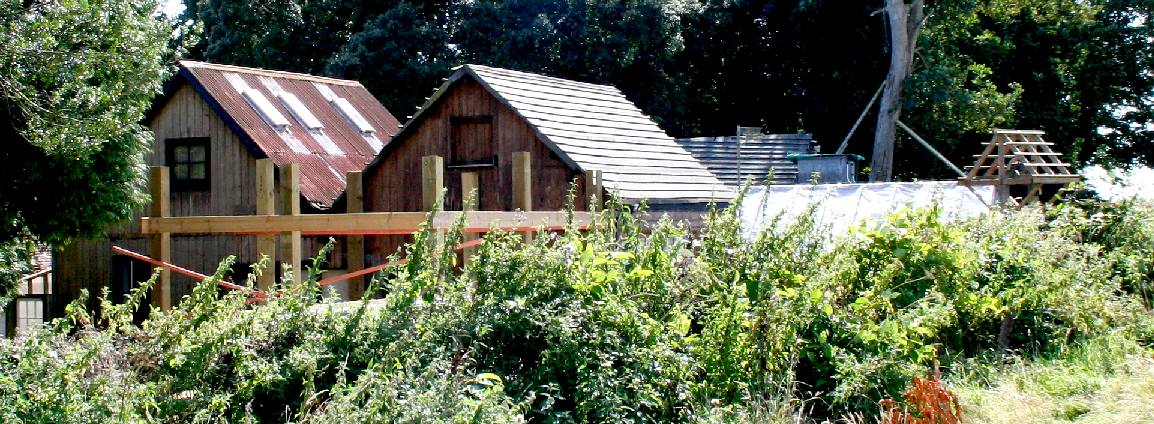
The generating station situated at Lime Park in Herstmonceux, East Sussex, is a rare surviving structure from the dawn of electrification.
Initiated in the late 1890s (c. 1896–1898) by Baron von Roemer and further expanded by his son, Charles de Roemer, the site was built to power the local estate before expanding to supply DC electricity to the surrounding village.
KEY
HISTORICAL & TECHNICAL FEATURES
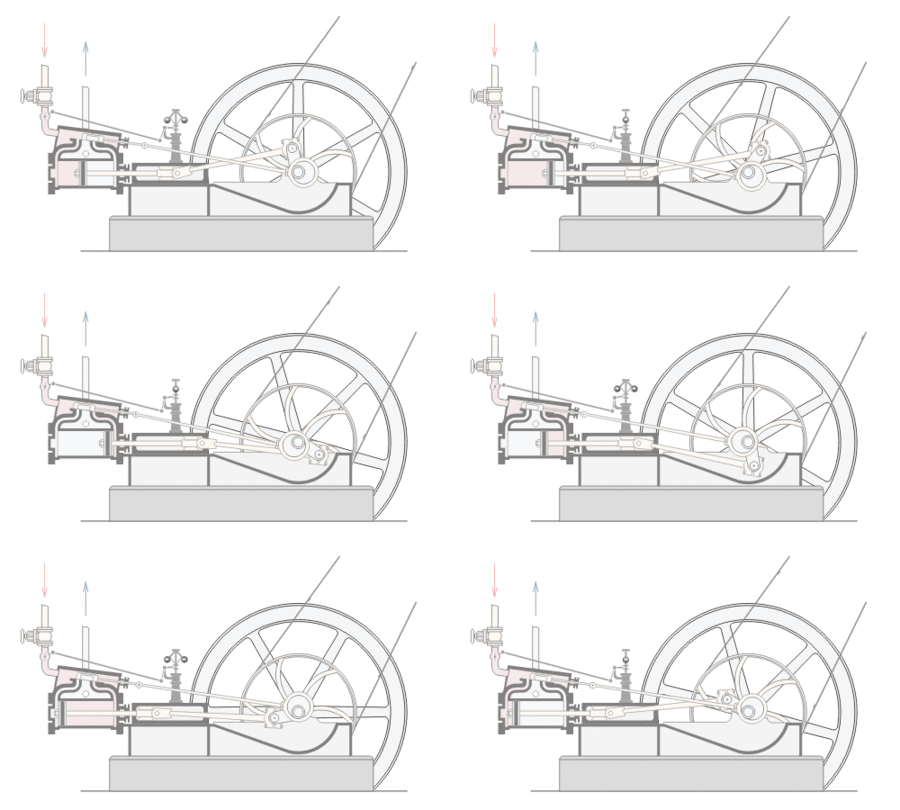
- Coal-to-Gas Generation: The plant utilized a coal-gas system where coal was gasified on-site to run a single-cylinder National gas engine (around 36 horsepower) coupled to a Crompton generator.
-
Early Commercial Battery Load-Levelling: The site housed a large bank of lead-plate glass batteries. By day, the gas engine generated electricity and charged the battery bank; at night, the engine was switched off to eliminate noise, with the batteries maintaining power for street lighting and local homes.
-
Rare Architecture: Unusually for an industrial coal-gas facility, the original structure was built from imported redwood timber rather than brick or stone, match-boarded inside and out. It was later clad in corrugated iron prior to WWII for protection.
- Surviving Physical Record: While earlier pioneer stations like Edison’s Holborn Viaduct (1882) or Pearl Street (1882) were demolished or destroyed, the Herstmonceux powerhouse remains standing. Archaeological surveys (including work by Archaeology South East) have documented its concrete engine beds, battery room footprint, and original timber framework. It stands as arguably the only surviving physical structure of a small-scale, coal-gas-powered rural generating station with integrated battery storage from the 19th century.
What Makes Herstmonceux Unique in a Survey Context
In a wider survey, Herstmonceux occupies a distinct niche compared to these examples:
Construction Material: Virtually all other surviving 19th-century sites were built of brick or local stone. Herstmonceux’s timber-frame design (imported redwood) makes it a rare surviving specimen of wooden industrial engineering.
Coal-Gas to Battery Architecture: Most small-scale survivors are hydro-based. Herstmonceux represents the small-scale coal-to-town-gas engine configuration, paired explicitly with commercial battery storage for rural load-levelling.
Transition to Public Supply: Unlike pure estate setups (Bateman's, Cragside), Herstmonceux began as a private supply and expanded into a village micro-utility.

Establishing the historical significance of the Herstmonceux generating station in a comparative survey, its uniqueness rests on a precise combination of factors:
The Verdict
- 46 Kensington Court is widely recognized as the earliest surviving urban central station building designed around DC battery storage/load-levelling for public supply.
- Herstmonceux remains exceptionally rare—and likely unique—as a surviving timber-built, coal-gas engine station that provided public/village supply using battery load-levelling.
While stone and brick hydro or steam stations like Lynmouth or Powick Mills survived due to their robust construction materials, Herstmonceux's survival as a lightweight, timber-framed utility building from 1896 is an architectural anomaly.
Relevance to Herstmonceux’s Heritage Case
UNESCO’s strict criteria for industrial heritage focus heavily on authenticity and integrity:
a) Intactness Over Conversion: The complete gutting of Kensington Court or Battersea eliminates their potential for top-tier international recognition, as they exist purely as architectural envelopes.
b) Survival of the Mechanism: The value of a site like Herstmonceux in a heritage survey relies on the physical retention of its operational layout—the timber frame, the concrete engine beds, the gas-plant evidence, and the battery room space.
c) Purity of Purpose: Herstmonceux represents a preserved "snapshot" of late-Victorian rural electrification that avoided the modern gutting that claimed urban equivalents.
CHAPTERS
CHARACTERS
SURVEY - UK
& INTERNATIONAL EARLY POWER GENERATING INSTALLATIONS
|
Ames Hydroelectric Generating Plant,
Colorado, USA -
|
1891
|
Operational
- Westinghouse |
|
Batemans,
Burwash, Sussex, Kipling, UK. Hydroelectric water turbine
|
1902
|
Grade I
listed |
|
Battersea Power Station,
London, UK. Completely gutted for flats
|
1933
|
Grade II*
listed |
|
Coldharbour Mill, Devon,
surviving gas engine
-
|
1895
|
Woolen
Mill |
|
Cragside,
UK
- The world’s first hydro-lit home, William Armstrong
|
1880
|
Grade I
listed |
|
Cwm Dyli Hydro Power Station,
Snowdonia, Wales -
|
1878>
|
Operational |
|
Godalming, Surrey, UK,
River Wey -
|
1881
|
Shut down
1884 |
|
Greenwich Power Station,
London, UK, steam
-
|
1906
|
Standby
gas turbine, operational |
|
Holborn Viaduct,
57, London, UK, Thomas Edison
-
|
1882
|
Destroyed,
Blitz |
|
Hulne Park / Alnwick Castle, (Duke) Northumberland - water turbines
|
1889
|
Surviving
stone building |
|
Japan, Meiji,
-1910 coal power structures Hashima Island & Miike
-
|
1890>
|
UNESCO
Inscribed 2015
|
|
Kensington
Court, 46, Queen's Gate, London, W8 -
|
1887
|
Gutted,
Flats, Grade II listed |
|
Laxey Glen, Isle of Man, Snaefell Mountain Railway
-
|
1898
|
Transport
Sheds |
|
Lynmouth
Power Station -
|
1890s
|
Destroyed
1952 flood |
|
Mechanicville Hydroelectric Plant,
New York, USA
-
|
1897
|
Operational |
|
Norway
- Vemork Hydroelectric Power Station, Rjukan–Notodden
|
1911
|
UNESCO
Inscribed
2015 |
|
Pearl Street Station,
Manhattan, New York, USA, September - Edison
|
1882
|
Burned
down 1890 |
|
Powick Mills, Worcester
-
|
1894
|
Residential
Flats |
|
Sandy
Lane Power Station, Coventry, UK - Electric Wharf
|
1895
|
Redeveloped,
ind. & residential |
|
Shiplake
Pumping & Generating Station, Oxfordshire - R. Thames
|
1897
|
Converted
to a School |
|
Sidrapong Hydel Power Station,
Darjeeling, W. Bengal, India, hydro
|
1897
|
Operational |
|
The Milestone: Hudson
River, North America hydroelectric
|
1897
|
Operational |
|
Wallington Hall, Northumberland, Estate ,private by oil/gas engine
|
1890s
|
Surviving
stone building |
|
Waddesdon
Manor, Buckinghamshire, Estate, Ferdinand de Rothschild
|
1889
|
Surviving
stone building |
There
were many other contributors. If
you know of any information that may help us complete this survey, please get in
touch.
|