|
Cragside, Northumberland (1878/1880): Built by Lord Armstrong, this is famous as the world’s first house lit by hydroelectricity. The estate retains the original stone pump house and turbine house structures on the Debdon Burn, along with the lakes created as storage reservoirs.
From a small house perched above a stream, William and Margaret Armstrong created a home powered by the landscape. Lakes, rivers and dams were designed to harness nature's force and transform it into sustainable
energy using water to create electricity.
Illuminated by
hydroelectricity
and powered by hydraulics, Cragside was a place like no other. Central heating, electric light, gravity-fed plumbing,
water-powered machinery and a hydraulic lift provided an unrivalled level of comfort.
Among Cragside’s many innovations was the wonder of electric light. In 1878 carbon-arc lamps were installed into the Gallery, casting a spectacular if glaring light. Armstrong collaborated with the chemist Joseph Swan, and in 1880 the Library saw the first domestic installation of his recently invented incandescent lightbulbs. The cloisonné vases that were adapted as lamps still sit on the bookcases.
Armstrong’s early experiments with electric lighting were small scale, but in time he built a second hydro-electric power station to cope with increasing demand. Water from the additional artificial lakes at Nelly’s Moss supplied the turbine-operated dynamos, still present at Burnfoot Power House.
Armstrong invented a revolutionary style of field gun. It was breech-loaded, meaning that shells could be fed into the back of its barrel rather than muzzle. This made it safer to use, more accurate and longer ranging.
In 1859 Armstrong was awarded a knighthood when he gifted his gun patents to the British government.
In 1977, Cragside was transferred to the National Trust. Cragside opened to the public in 1979 and the formal gardens were acquired in 1991. Today, Cragside is still a place of engineered beauty that sparks curiosity.
...
COMPETING
TECHNOLOGY - WHICH IS THE OLDEST?
Determining the "oldest" power station depends on whether you mean the first central station ever built (now extinct), the oldest site still actively generating power today, or the oldest surviving physical structure.
1. THE WORLD'S EARLIEST POWER STATIONS (Historical Pioneer)
Godalming, Surrey, UK (October 1881): The world’s first public electricity supply was a small hydro-powered setup at Godalming. A waterwheel on the River Wey powered a Siemens alternator, lighting public street lamps. It was economically unviable and shut down within three years.
Holborn Viaduct, London, UK (January 1882): Built at 57 Holborn Viaduct by Thomas Edison, the Edison Electric Light Station was the world's first steam-driven, coal-fired power station for public use. It powered nearly 1,000 street lamps and local homes using Edison’s 27-tonne "Jumbo" generator. It closed in 1886 and was later destroyed during the Blitz.
Pearl Street Station, New York, USA (September 1882): Edison’s central station in Manhattan was the first commercial central power plant in the US. It burned down in 1890, sparing only a single original generator.
2. OLDEST POWER STATIONS STILL GENERATING ELECTRICITY TODAY
If the criteria requires continuous operation supplying power from the original late-19th century era, hydroelectricity holds the title:
Current Status: Refitted over the decades, the plant remains in active commercial generation today, fed by water from Trout Lake.
- Sidrapong Hydel Power Station (Darjeeling, West Bengal, India) — Operational since 1897 The Milestone: Commissioned in November 1897 with two 65 kW British-built Crompton-Brunton turbines, Sidrapong was India's first hydroelectric station built to power the municipality and nearby tea gardens.
Current Status: Upgraded over the decades (including a major overhaul in 1931), it is recognized as one of the oldest operational hydroelectric plants in Asia.
- Mechanicville Hydroelectric Plant (New York, USA) — Operational since 1897
The Milestone: Located on the Hudson River, it began operating in 1897.
Current Status: It is widely cited as the oldest continuously operating grid-connected hydroelectric power plant in North America.
3. OLDEST SURVIVING THERMAL / GRID-CONNECTED SITES IN THE UK
Cwm Dyli Hydro Power Station (Snowdonia, Wales) — Operational since 1906 Known locally as the "Chapel in the Valley" due to its non-conformist chapel-style brick architecture, Cwm Dyli was built in 1905–1906 to power local slate quarries and electric railways. It remains Britain's oldest continuously operating, grid-connected power station.
Greenwich Power Station (London, UK) — Operational since 1906 Built between 1902 and 1910 to power the London County Council tramways, Greenwich was originally equipped with massive reciprocating steam engines. It is considered the oldest surviving non-hydro power station structure in Europe still maintaining active electrical equipment, currently serving as a standby emergency gas-turbine plant for the London Underground network.
The generating station situated at Lime Park in Herstmonceux, East Sussex, is a rare surviving structure from the dawn of electrification.
Initiated in the late 1890s (c. 1896–1898) by Baron von Roemer and further expanded by his son, Charles de Roemer, the site was built to power the local estate before expanding to supply DC electricity to the surrounding village.
KEY
HISTORICAL & TECHNICAL FEATURES
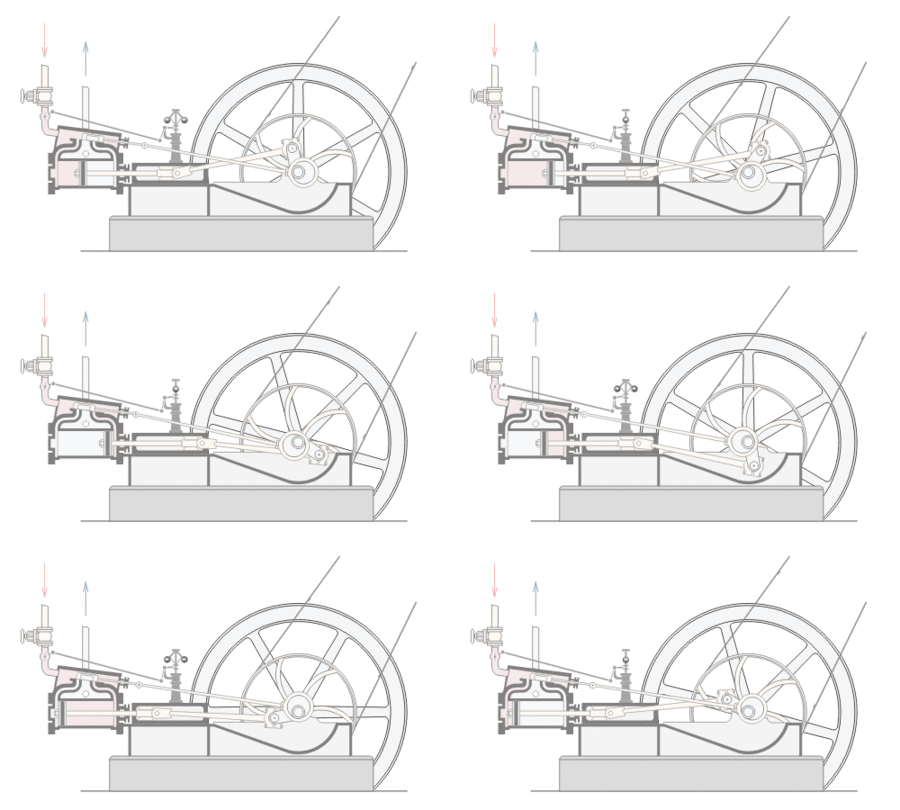
- Coal-to-Gas Generation: The plant utilized a coal-gas system where coal was gasified on-site to run a single-cylinder National gas engine (around 36 horsepower) coupled to a Crompton generator.
-
Early Commercial Battery Load-Levelling: The site housed a large bank of lead-plate glass batteries. By day, the gas engine generated electricity and charged the battery bank; at night, the engine was switched off to eliminate noise, with the batteries maintaining power for street lighting and local homes.
-
Rare Architecture: Unusually for an industrial coal-gas facility, the original structure was built from imported redwood timber rather than brick or stone, match-boarded inside and out. It was later clad in corrugated iron prior to WWII for protection.
- Surviving Physical Record: While earlier pioneer stations like Edison’s Holborn Viaduct (1882) or Pearl Street (1882) were demolished or destroyed, the Herstmonceux powerhouse remains standing. Archaeological surveys (including work by Archaeology South East) have documented its concrete engine beds, battery room footprint, and original timber framework. It stands as arguably the only surviving physical structure of a small-scale, coal-gas-powered rural generating station with integrated battery storage from the 19th century.

WIDER
SURVEY
A comprehensive survey of late 19th- and early 20th-century micro-grids and private generating stations across the UK highlights several key surviving sites. These fall into three distinct categories: grand country-house installations, early municipal/commercial setups, and industrial private-plant structures.
1. ESTATE & COUNTRY HOUSE MICRO-GRIDS (PRIVATE GENERATION)
While Kipling’s Bateman’s was a localized setup, other grand estates built dedicated powerhouse outbuildings that are preserved today:
Wallington Hall, Northumberland (1890s): The estate features a surviving stone-built battery room and engine house outbuilding built to supply DC electricity to the hall using a oil/gas engine setup.
Hulne Park / Alnwick Castle, Northumberland (1889): Built by the 6th Duke of Northumberland, the riverside powerhouse near the Cannongate weir on the River Aln housed water turbines and a bank of glass accumulator batteries. The brick/stone powerhouse structure survives and was restored.
Waddesdon Manor, Buckinghamshire (1889): Baron Ferdinand de Rothschild constructed a dedicated power station disguised as a estate building away from the main house to supply electricity without noise or smoke. The building structure still exists on the estate grounds.
2. Early Local Municipal & Commercial Schemes
For broader surveys that look at rural or local public supplies (like the de Roemer venture at Herstmonceux):
46 Kensington Court, London, W8 (1887): Designed by Rookes Crompton (the same electrical pioneer whose generators were used at Herstmonceux),
No. 46 Kensington Court is recognized by Historic England as one of the oldest surviving purpose-built suburban electricity sub-station/generating buildings in the UK.
A Grade II Listed Building in Queen's Gate, London. Listing NGR: TQ2583179684
TQ 2579 NE 31/28 13.12.77
Former electricity generating station. 1888. Designed possibly by J J Stevenson. Three storeys. Red brick with stone string courses, corbels and other details. Brick pilaster strips divide the bays at first and second floor levels. Terra-cotta panels in pediment over main entrance and in end bays at second floor level. Stone plaque over main entrance instribed 'Electric Lighting Station'. The original generating equipment was designed and installed by Colonel Compton, a pioneer in the field. The building was used for this purpose from 1888-1900. Listed for its historical importance as one of the earliest surviving electricity generating stations.
Shiplake Pumping & Generating Station, Oxfordshire (1890s): Built alongside the
River
Thames, this small-scale brick structure housed steam pumping engines and early dynamos to supply local domestic lighting and river-lock
infrastructure.
Powick Mills, Worcester (1894): Built by the Worcester Corporation, Powick Mills was the UK's first combined municipal hydro-electric and steam generating station. The substantial brick building still stands along the River Teme, having been converted into residential flats while preserving its industrial heritage.
3. Industrial & Transport Powerhouses
Laxey Glen, Isle of Man (1898): Built to supply the Snaefell Mountain Railway and local electric tramways, the water-driven and gas-engine generating shed structures at Laxey survive as early examples of localized transport electrification.
Coldharbour Mill, Devon (1895): A surviving woollen mill featuring an intact gas-engine and early direct-current dynamo shed setup used to supply electricity to both the factory floor and adjacent worker
cottages.
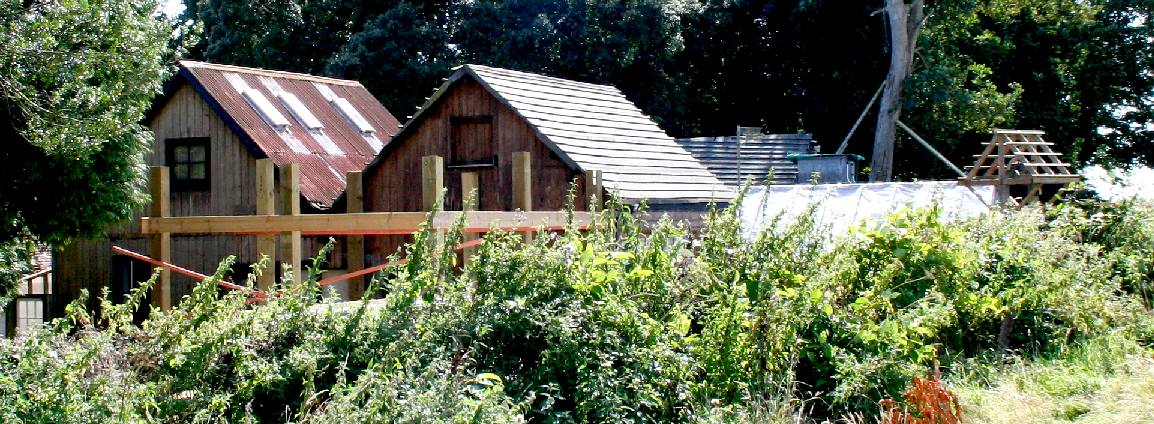
What Makes Herstmonceux Unique in a Survey Context
In a wider survey, Herstmonceux occupies a distinct niche compared to these examples:
Construction Material: Virtually all other surviving 19th-century sites were built of brick or local stone. Herstmonceux’s timber-frame design (imported redwood) makes it a rare surviving specimen of wooden industrial engineering.
Coal-Gas to Battery Architecture: Most small-scale survivors are hydro-based. Herstmonceux represents the small-scale coal-to-town-gas engine configuration, paired explicitly with commercial battery storage for rural load-levelling.
Transition to Public Supply: Unlike pure estate setups (Bateman's, Cragside), Herstmonceux began as a private supply and expanded into a village micro-utility.

The timeline and surviving building comparisons have a few subtle nuances worth untangling for
our formal survey.
1. 46 Kensington Court vs. Herstmonceux
46 Kensington Court (London, W8, 1886–1887): Designed by Colonel Rookes Evelyn Bell Crompton, Kensington Court was indeed a groundbreaking central station that pioneered the use of direct current (DC) with secondary battery storage (lead-acid accumulators) connected in parallel with the mains. Crompton specifically used battery banks to handle the low night-time load so he could shut down the heavy steam boilers and steam dynamos overnight, saving coal and reducing urban noise.
The Distinction: Kensington Court was a large, urban, steam-driven central station serving an affluent suburb of London. The surviving building at No. 46 (a distinctive red-brick structure) was part of this pioneering station layout.
Herstmonceux (1896): Where Herstmonceux stands out is that it represents a coal-gas (town gas) generation plant rather than steam. Gas engines were far better suited to rural micro-grids than steam boilers because they could be started and stopped quickly without wasting fuel maintaining steam pressure. Herstmonceux paired a single-cylinder National gas engine with Crompton dynamos and a large glass-cell battery bank to run the village overnight.
2. Are There Any Other Competing Surviving Buildings?
When surveying surviving 19th-century public or semi-public generating structures with battery load-levelling, only a handful of candidates exist, and each occupies a slightly different niche:
A. Powick Mills, Worcester (1894)
The Setup: Built by the Worcester Corporation as the UK’s first municipal combined hydro and steam station.
Public Supply: Yes, it supplied AC and DC electricity to the city of Worcester.
Battery Usage: It utilized water power by day and steam/batteries to balance load.
Surviving Building: The substantial brick powerhouse still stands today (converted to apartments).
B. Lynmouth Power Station, Devon (1890)
The Setup: Built by Charles Green for public lighting in Lynmouth. It was primarily hydroelectric (using turbines driven by the East Lyn River) backed up by a steam engine and accumulator batteries.
Public Supply: Yes, one of the earliest commercial hydro-electric schemes supplying a village/town in the UK.
Surviving Building: The original stone building survived the catastrophic 1952 Lynmouth flood and stands today (currently used as the Glen Lyn Gorge visitor center/museum).
C. Keyham Barton / Devonport Dockyard (1890s)
The Setup: Large industrial generator plants supplying shore power and dock infrastructure, using early Crompton battery storage systems.
Surviving Building: Various dockyard structures survive, but these were naval/military, not public village supplies.
3. Summary for Our Survey Classification
If you are establishing the historical significance of the Herstmonceux generating station in a comparative survey, its uniqueness rests on a precise combination of factors:
The Verdict
- 46 Kensington Court is widely recognized as the earliest surviving urban central station building designed around DC battery storage/load-levelling for public supply.
- Herstmonceux remains exceptionally rare—and likely unique—as a surviving timber-built, coal-gas engine station that provided public/village supply using battery load-levelling.
While stone and brick hydro or steam stations like Lynmouth or Powick Mills survived due to their robust construction materials, Herstmonceux's survival as a lightweight, timber-framed utility building from 1896 is an architectural anomaly.
UNESCO
- WORLD HERITAGE STATUS
Very few 19th- or early 20th-century generating stations have received UNESCO World Heritage status.
Where sites have gained World Heritage recognition, it is almost exclusively because the powerhouse is preserved as an intact industrial artifact with its original machinery, or because it forms part of a wider historic industrial landscape.
1. Power Stations on the UNESCO World Heritage List
Sites of Japan’s Meiji Industrial Revolution (Japan) — Inscribed 2015
- The Site: Includes early heavy-industrial complexes, mines, and localized power plants established in the late 19th century (such as the coal-fired powerhouse structures serving the undersea coal mines at Hashima Island and Miike).
- Why it Qualifies: They illustrate the rapid transfer of Western industrial technology (including steam and electrical power) to East Asia between 1850 and 1910.
2. Major Sites Not Inscribed (and Why)
Most famous early power stations are not World Heritage
Sites, often due to loss of integrity or conversion:
- Cragside (UK): The world’s first hydro-lit home is a UK Grade I listed site and a National Trust treasure, but it is not individually inscribed on the UNESCO list.
- Battersea Power Station (UK): A famous UK Grade II* listed building, but its interior was completely gutted during redevelopment into luxury housing, retail, and office space. This loss of industrial integrity excludes it from World Heritage consideration.
- Pearl Street & Holborn Viaduct: Both demolished or destroyed, leaving no physical structure behind.
3. Relevance to Herstmonceux’s Heritage Case
UNESCO’s strict criteria for industrial heritage focus heavily on authenticity and integrity:
a) Intactness Over Conversion: The complete gutting of Kensington Court or Battersea eliminates their potential for top-tier international recognition, as they exist purely as architectural envelopes.
b) Survival of the Mechanism: The value of a site like Herstmonceux in a heritage survey relies on the physical retention of its operational layout—the timber frame, the concrete engine beds, the gas-plant evidence, and the battery room space.
c) Purity of Purpose: Herstmonceux represents a preserved "snapshot" of late-Victorian rural electrification that avoided the modern gutting that claimed urban equivalents.
CHAPTERS
CHARACTERS
SURVEY - UK
& INTERNATIONAL EARLY POWER GENERATING INSTALLATIONS
|
Ames Hydroelectric Generating Plant,
Colorado, USA -
|
1891
|
Operational
- Westinghouse |
|
Batemans,
Burwash, Sussex, Kipling, UK. Hydroelectric water turbine
|
1902
|
Grade I
listed |
|
Battersea Power Station,
London, UK. Completely gutted for flats
|
1933
|
Grade II*
listed |
|
Coldharbour Mill, Devon,
surviving gas engine
-
|
1895
|
Woolen
Mill |
|
Cragside,
UK
- The world’s first hydro-lit home, William Armstrong
|
1880
|
Grade I
listed |
|
Cwm Dyli Hydro Power Station,
Snowdonia, Wales -
|
1878>
|
Operational |
|
Godalming, Surrey, UK,
River Wey -
|
1881
|
Shut down
1884 |
|
Greenwich Power Station,
London, UK, steam
-
|
1906
|
Standby
gas turbine, operational |
|
Holborn Viaduct,
57, London, UK, Thomas Edison
-
|
1882
|
Destroyed,
Blitz |
|
Hulne Park / Alnwick Castle, (Duke) Northumberland - water turbines
|
1889
|
Surviving
stone building |
|
Japan, Meiji,
-1910 coal power structures Hashima Island & Miike
-
|
1890>
|
UNESCO
Inscribed 2015
|
|
Kensington
Court, 46, Queen's Gate, London, W8 -
|
1887
|
Gutted,
Flats, Grade II listed |
|
Laxey Glen, Isle of Man, Snaefell Mountain Railway
-
|
1898
|
Transport
Sheds |
|
Lynmouth
Power Station -
|
1890s
|
Destroyed
1952 flood |
|
Mechanicville Hydroelectric Plant,
New York, USA
-
|
1897
|
Operational |
|
Norway
- Vemork Hydroelectric Power Station, Rjukan–Notodden
|
1911
|
UNESCO
Inscribed
2015 |
|
Pearl Street Station,
Manhattan, New York, USA, September - Edison
|
1882
|
Burned
down 1890 |
|
Powick Mills, Worcester
-
|
1894
|
Residential
Flats |
|
Sandy
Lane Power Station, Coventry, UK - Electric Wharf
|
1895
|
Redeveloped,
ind. & residential |
|
Shiplake
Pumping & Generating Station, Oxfordshire - R. Thames
|
1897
|
Converted
to a School |
|
Sidrapong Hydel Power Station,
Darjeeling, W. Bengal, India, hydro
|
1897
|
Operational |
|
The Milestone: Hudson
River, North America hydroelectric
|
1897
|
Operational |
|
Wallington Hall, Northumberland, Estate ,private by oil/gas engine
|
1890s
|
Surviving
stone building |
|
Waddesdon
Manor, Buckinghamshire, Estate, Ferdinand de Rothschild
|
1889
|
Surviving
stone building |
There
were many other contributors. If
you know of any information that may help us complete this survey, please get in
touch.
|