|

It
was either fated, or the most incredible set of coincidences, that
brought the Generating Station's savoir together. For sure, without him,
the proud new owners in 1981, had it in mind to demolish what they saw as a
liability. That was until he was running short of change, and wanted to
secure the skills of his best decorator & handyman.
HERITAGE IMPACT STATEMENT
Property Name: The 1896 Generating Station
Location: Lime Park, Herstmonceux, East Sussex, BN27 1RF
Designation Status: Grade II Listed Building (and associated undesignated heritage assets within Lime
Park)
Subject: Assessment of Heritage Significance, Structural Integrity, and Impact of Encroaching Suburban Development (e.g., Chapel Green) on Setting under the National Planning Policy Framework (NPPF)
1. Executive Summary
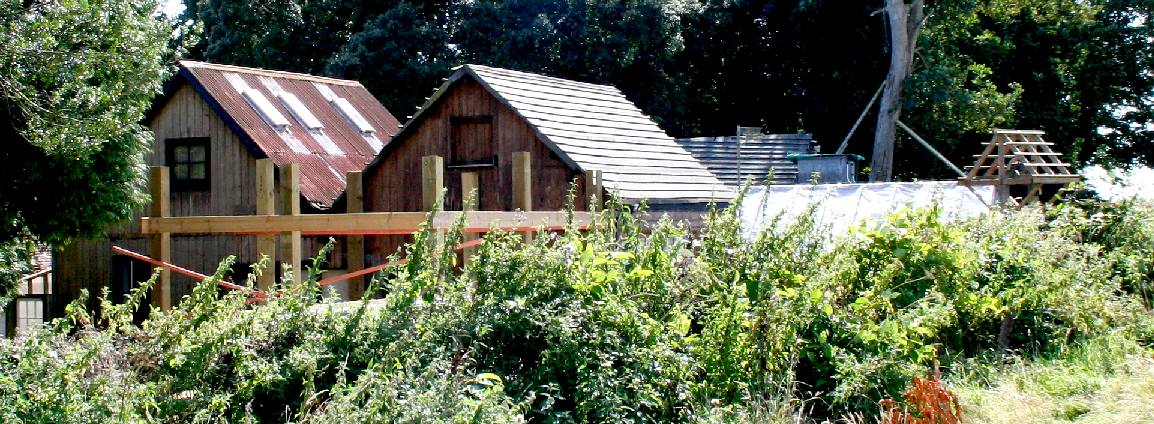
This Heritage Impact Statement evaluates the cultural, architectural, and technological significance of the 1896 Herstmonceux Generating Station, located within Lime Park, East Sussex. Constructed in the late 19th century by Baron von Roemer and Charles de Roemer, the site represents one of the world's earliest surviving coal-gas powered, battery-integrated rural generating stations supplying power to a public village network.
This statement assesses the impact of recent and proposed residential developments in the immediate vicinity—specifically the Chapel Green development (Persimmon / Charles Church)—against statutory planning policies set out in the National Planning Policy Framework (NPPF) and Historic England’s Good Practice Advice in Planning (GPA3: The Setting of Heritage Assets).

An
aerial view of Herstmonceux Museum in 2022, showing the public footpaths
north of the generating buildings. Many of which are unregistered, but
well trodden for over forty years, from our records.
2. Statement of Significance
2.1 Architectural & Material Significance
The Herstmonceux Generating Station is an exceptionally rare surviving timber-framed industrial utility structure from the late 19th century. Constructed from imported redwood with internal match-boarding, it stands in stark contrast to urban central power stations constructed of brick or stone. While contemporary urban structures (e.g., 46 Kensington Court, London) have been entirely stripped of their internal operational equipment and converted into residential apartments, the Herstmonceux site retains its original structural envelope and physical evidence of its operational layout.
2.2 Technological & Archaeological Significance
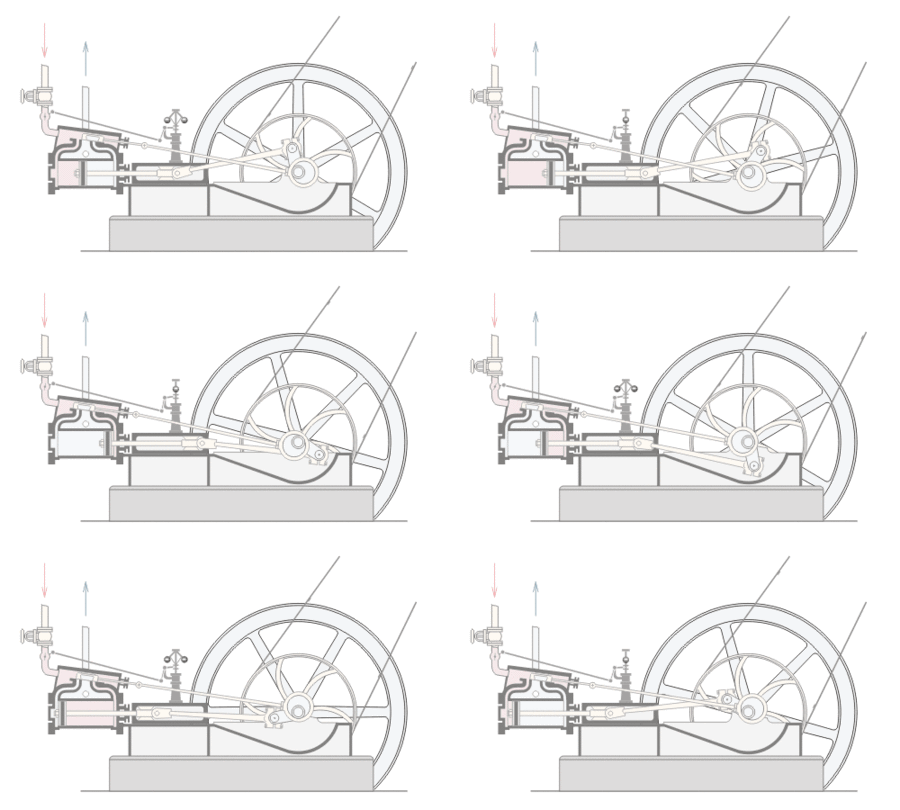
The property embodies a critical milestone in electrical engineering: the deployment of direct current (DC) micro-grids with battery load-levelling. The plant utilized a single-cylinder National gas engine fed by coal-derived town gas driving Crompton dynamos. Crucially, the site integrated a substantial bank of glass-cell lead-acid accumulators. The engine was operated by day to generate power and charge the battery bank, allowing the plant to be shut down overnight to eliminate noise and vibration while maintaining continuous public street lighting and domestic supply to the village.
The survival of concrete engine beds, sub-floor cable trenches, exhaust channels, and the spatial footprint of the battery room renders the building a rare primary industrial artifact of high archaeological legibility.
3. Relevant Planning Policy Context (NPPF)The assessment of heritage harm and impact on setting is governed by the following key policies within the National Planning Policy Framework (NPPF):
NPPF Paragraph 195 (Identifying Significance): Local planning authorities are required to identify and assess the particular significance of any heritage asset that may be affected by a proposal (including development affecting its
setting).
NPPF Paragraph 199 (Great Weight to Asset Conservation): "When considering the impact of a proposed development on the significance of a designated heritage asset, great weight should be given to the asset’s conservation (and the more important the asset, the greater the weight should be). This is irrespective of whether any potential harm amounts to substantial harm, total loss or less than substantial harm to its significance.
"NPPF Paragraph 200 (Harm and Loss): Any harm to, or loss of, the significance of a designated heritage asset (from its alteration or destruction, or from development within its setting), should require clear and convincing justification.NPPF Paragraph 201 & 202 (Substantial vs. Less Than Substantial Harm): Where a development proposal will lead to harm, this harm must be weighed against the public benefits of the proposal.
NPPF Paragraph 206 (Enhancing Setting): Local planning authorities should look for opportunities for new development within the setting of heritage assets to enhance or better reveal their significance.
4. Assessment of Harm to Setting
4.1 Definition of Setting (Historic England GPA3)
In accordance with Historic England guidance, the setting of a heritage asset is defined as "the surroundings in which an asset is experienced." The setting of the Herstmonceux Generating Station is inextricably linked to its historic rural, off-grid context in Lime Park and its spatial visual relationship with the village of Herstmonceux, which it served via early overhead supply networks.
4.2 Impact of Suburban Encroachment (Chapel Green Development)
The construction of modern high-density housing developments in immediate proximity to Lime Park—such as the Chapel Green development—results in demonstrable harm to the setting and contextual legibility of the generating station:
Erosion of Rural Character and Historical Context: The introduction of modern multi-story residential housing disrupts the historical, open agricultural setting that defined the site's operating environment in 1896. An off-grid, estate-based micro-utility relies on its spatial isolation and visual connection to the surrounding village to communicate its historic function.
Loss of Key Sightlines and Visual Enclosure: Suburban housing encroaches upon historic approaches and visual corridors connecting Lime Park to the wider village landscape. Enclosing the historic parkland within modern residential boundaries reduces the asset’s legibility to a mere suburban footnote rather than an intact historical industrial complex.
Cumulative Harm: While individual residential applications may claim "less than substantial harm" in isolation, the cumulative impact of sequential developments (Persimmon / Charles Church) severely degrades the overall historical landscape setting, breaching the requirement under NPPF Paragraph 199 to give "great weight" to asset
conservation.
5. Comparative Integrity: Herstmonceux vs. Converted Urban
Sites

High-density urban (substantially altered) Rural estate parkland (threatened by suburban
encroachment) As demonstrated above, unlike urban counterparts where adaptive reuse has completely destroyed internal industrial context, Herstmonceux retains genuine material integrity. Protecting its setting against surrounding development is essential to preserving this legibility.
6. Conclusion & Recommendations
Refusal or Mitigation of Encroaching Development: Local planning authorities must rigorously enforce NPPF Paragraphs 199–202. Any future developments affecting the setting of Lime Park should be resisted unless clear and convincing justification demonstrates that public benefits decisively outweigh the cumulative heritage harm.
Establishment of a Protected Buffer Zone: In line with UNESCO World Heritage Operational Guidelines and Historic England setting principles, a formal heritage buffer zone should be recognized around Lime Park to shield remaining sightlines and rural boundaries from further residential expansion.
Statutory Designation Upgrade: Given its national and international rarity as an intact timber-built 19th-century generating station with surviving internal archaeological features, the site's statutory listing and protections should be reviewed to reflect its national significance.
...

Lead-acid
batteries in banks, were mounted on glass insulators, in rooms like that
above. The idea being to store large amounts of energy.
CHAPTERS
CHARACTERS
SURVEY - UK
& INTERNATIONAL EARLY POWER GENERATING INSTALLATIONS
|
Ames Hydroelectric Generating Plant,
Colorado, USA -
|
1891
|
Operational
- Westinghouse |
|
Batemans,
Burwash, Sussex, Kipling, UK. Hydroelectric water turbine
|
1902
|
Grade I
listed |
|
Battersea Power Station,
London, UK. Completely gutted for flats
|
1933
|
Grade II*
listed |
|
Coldharbour Mill, Devon,
surviving gas engine
-
|
1895
|
Woolen
Mill |
|
Cragside,
UK
- The world’s first hydro-lit home
|
1880
|
Grade I
listed |
|
Cwm Dyli Hydro Power Station,
Snowdonia, Wales
-
|
1878>
|
Operational |
|
Godalming, Surrey, UK,
River Wey, October
-
|
1881
|
Shut down
1884 |
|
Greenwich Power Station,
London, UK, steam
-
|
1906
|
Standby
gas turbine, operational |
|
Holborn Viaduct,
57, London, UK, Thomas Edison
-
|
1882
|
Destroyed,
Blitz |
|
Hulne Park / Alnwick Castle, (Duke) Northumberland
- water turbines
|
1889
|
Surviving
stone building |
|
Japan, Meiji,
1910 coal power structures Hashima Island & Miike
-
|
1890>
|
UNESCO Inscribed 2015
|
|
Kensington
Court, 46, Queen's Gate, London, W8 -
|
1887
|
Gutted,
Flats, Grade II listed |
|
Laxey Glen, Isle of Man, Snaefell Mountain Railway
-
|
1898
|
Transport
Sheds |
|
Lynmouth
Power Station
-
|
1890s
|
Destroyed
1952 flood |
|
Mechanicville Hydroelectric Plant,
New York, USA
-
|
1897
|
Operational |
|
Norway
- Vemork Hydroelectric Power Station,
Rjukan–Notodden
|
1911
|
UNESCO
Inscribed
2015 |
|
Pearl Street Station,
Manhattan, New York, USA, September
- Edison
|
1882
|
Burned
down 1890 |
|
Powick Mills, Worcester
-
|
1894
|
Residential
Flats |
|
Sandy
Lane Power Station, Coventry, UK - Electric Wharf
|
1895
|
Redeveloped,
ind. & residential |
|
Shiplake
Pumping & Generating Station, Oxfordshire
- R. Thames
|
1897
|
Converted
to a School |
|
Sidrapong Hydel Power Station,
Darjeeling, W. Bengal, India, hydro
|
1897
|
Operational |
|
The Milestone: Hudson
River, North America hydroelectric
|
1897
|
Operational |
|
Wallington Hall, Northumberland, Estate ,private by oil/gas engine
|
1890s
|
Surviving
stone building |
|
Waddesdon
Manor, Buckinghamshire, Estate, Ferdinand de Rothschild
|
1889
|
Surviving
stone building |
If
you may know of any information that may help us complete this story, please get in
touch:
Herstmonceux
Museum
Lime
Park, East Sussex
BN27
1RF
United
Kingdom
|