|
PROPERTY DEVELOPERS |
|
vs CONSERVATION |
||||||||||||||||||||||||||||||||||||||||||||||||||||||||||||||||||||||||||||||||||||||||||||||||||||||||||||||||||||||||||||||||||||||||||||||||||||||||||||||||||||||||||||||
|
EXHIBITS FRIENDS HERITAGE HOME LIME PARK OPEN DAYS PARKING TECHNOLOGY |
||||||||||||||||||||||||||||||||||||||||||||||||||||||||||||||||||||||||||||||||||||||||||||||||||||||||||||||||||||||||||||||||||||||||||||||||||||||||||||||||||||||||||||||||
|
It was either fated, or the most incredible set of coincidences, that brought the Generating Station's savoir together. For sure, without him, the proud new owners in 1981, had it in mind to demolish what they saw as a liability. That was until he was running short of change, and wanted to secure the skills of his best decorator & handyman.
You might agree that true life stories are stranger than fiction. This is one of those chronicles. We will never look at the Eiffel Tower the same again, contemplating how some monuments become preserved for posterity. How they have survived. Take, the Eiffel Tower as an example. A temporary structure, that has become synonymous with Paris and France. Tourists make a bee line for the famous Tower, a must see. Was it preordained to survive, by some divine vision of the future. Or was it just down to luck. Typically, there is a champion or two behind the scenes, with some kind of dogged persistence that drives heritage crusaders.
In the case of industrial archaeology, redundant technology is mostly swept aside by commercial considerations, as brown-field sites are typically swiftly redeveloped to earn their owners a few more shillings. Nobody really cares, or even recognises the value of recent advances. It's all to close in time, hence, cannot be of value. Not like Stonehenge, the Pyramids, or Great Wall of China.
For sure an insignificant wooden building in the corner of a country estate of little note, is unlikely to survive two world wars, woodworm, wet and dry rot, and worst of all; property developers.
On the passing of Baron von Roemer between 1917-1918 in the Great War, Lime Park passed to his good wife, Baroness (Lady) von Roemer, with Major Charles de Roemer, of Eastbourne Aviation Company fame, continuing to operate his electricity supply company at arm's length from his London home, in Wimbledon. The Baroness passed in 1951, when Lime Park became divided into smaller parcels and sold off, the proceeds being divided between siblings. Wickens Estates Limited came into the frame, presumably on the passing of Major de Roemer, to further subdivide, but Wicken's seem to have overlooked the generating emporium, being more of a liability, nestled out of sight behind the old stables and garages, renamed 'The Old Rectory,' possibly with one eye on later development. Instead of that, and with flora encroaching and no obvious use springing to mind, nature slowly took its course. And the buildings were consigned to the earth, left to rot.
But, on very rare occasions, archaeological remains are discovered by the most incredible stokes of luck. Or, might that be destiny? Whether fate or no, we will leave for you to decide. Remembering that technology advances at a frightening pace.
Thus it was, that during the long dry summer of 1981, a handyman was seconded to help Nikolia and Clare Askaroff, refurbish their proudest acquisition in Lime Park, Number 4, destined to become a heritage champion. How it was this couple came upon number four, is not known. But we do know that Clare was a fine artist, in water-colours, and relished living the dream of a bygone era, the subject of much of her art. We also know that 'Nick,' as he preferred to be called, was looking for a spacious house in which to raise a family, and most of all to please his spouse. He also loved a bargain. Clare, was more into architecture meeting her historic ideal. And number four had a large garden and views across the Pevensey Levels, to Eastbourne, where her father, Douglas Martin, lived and practiced as a dentist. it was conveniently distanced.
The handyman, was working for Nick's mother, Rosemarie Askaroff, at her nursery supply business. He was friends with Alexander Askaroff, Nick's younger brother. Alex and Vic both attended Ratton Secondary School, and later the Eastbourne College of Further Education, studying engineering. Rosemarie had eloped with Igor Askaroff, a Russian asylum seeker, after they met in Austria when she was just thirteen years of age. Moving from London to Eastbourne, Igor first worked as a dustman to support his family, while Rosemarie was an industrious seamstress, making ends meet by stitching clothes for her six children. Igor and Rosemarie founded Simplantex in Eastbourne with funding from Stuart J Twentyman-Turnbull, to make shower-proof buggy capes, that proved to be popular among the mothers Rosemarie met during school runs, and for invalid carriages. Their children's accessory business took off from there.
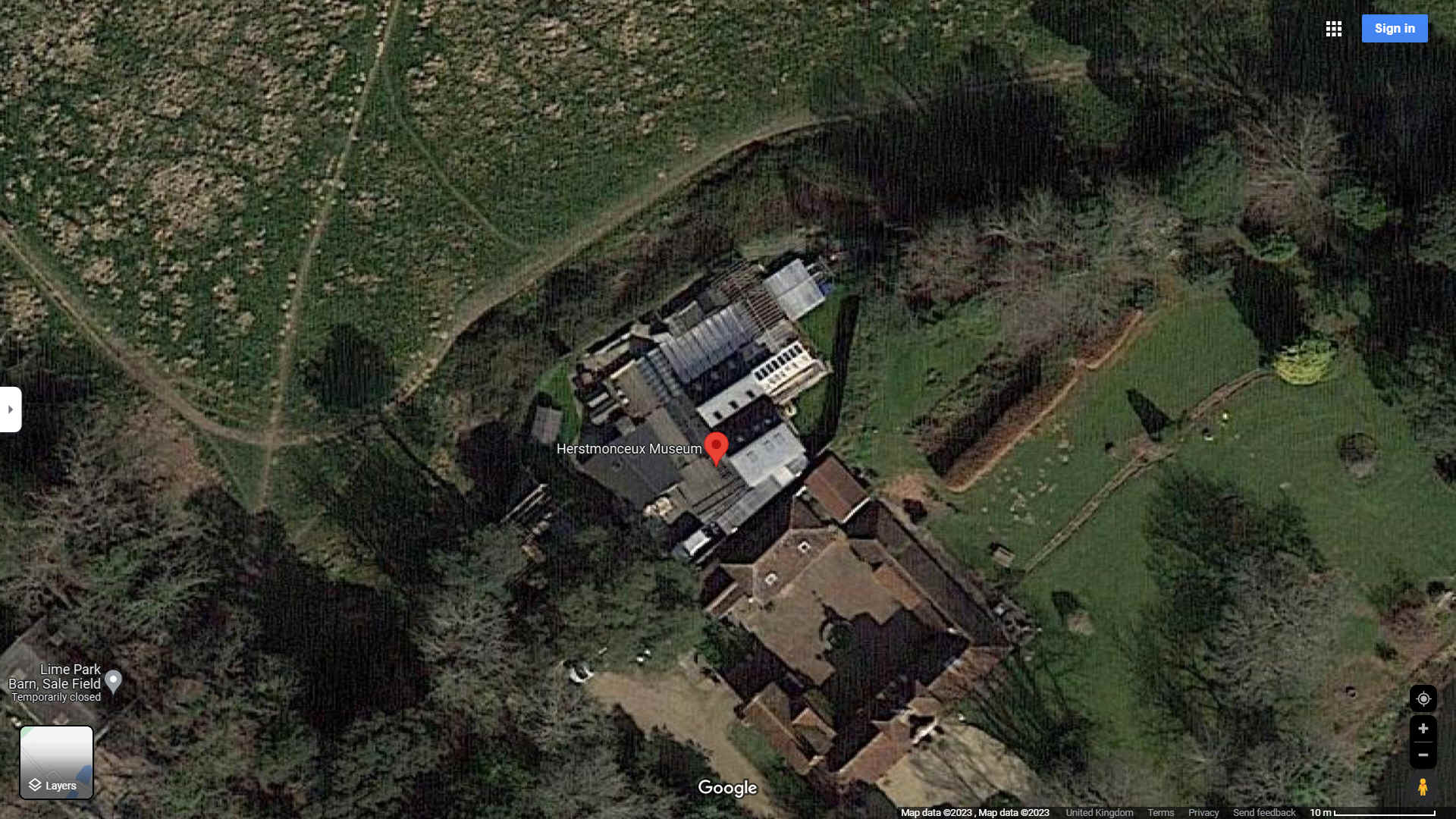
An aerial view of Herstmonceux Museum in 2022, showing the public footpaths north of the generating buildings. Many of which are unregistered, but well trodden for over forty years, from our records.
The real risk to historic remains appears to be property developers, who work with councils to generate sales and rental incomes allied to taxes.
In cities, the oldest known generating building is thought to be 46 Kensington Court, London. This building dating from 1886–1887, was completely gutted, all concrete bases, machinery, fittings, etc., all removed as the brick built unit was converted to flats. Even so, Historic England listed the building as a Grade II example of a geographical location, worthy of recognition.
In the country, archaeological remains are even more at risk from local authorities, hungry for cash, who are prone to downplay the importance of heritage buildings on their doorstep. Fighting conservation volunteers all the way to the Planning Inspectorate and High Court, blinded to cultural values, aiming to bankrupt any who stand in the way of Community Infrastructure Levies (CIL) payments, that only very well funded house builders can afford. But, which payments, very often do not go to road improvements, schools and doctors. And worst of all, such developments often involve the importation of water from other areas, and the dumping of raw sewage in the sea, as water companies rush to charge money for treatments they are unable to provide.
That is the sad reality and the fate of irreplaceable assets, as evidence of man's evolution.
More, an epitaph to Stock Exchanges, and shareholders.
Persimmon plc, Chapel Green housing development, Herstmonceux heritage view in September 2026
In this true story, a real life study of how housing development takes precedence over irreplaceable national treasures, the Players are Clarion Group, Latimer Homes, Persimmon plc, and Charles Church, all working toward building up to 70 houses over a heritage view, at what is now called Chapel Green.
Of course there is a need for new homes, especially affordable homes. But, as you can see for yourself, these are executive homes, built on greenbelt. In a water stressed area, with South East Water, being a drought region, suffering from hosepipe bans. And Southern Water being fined for raw sewage discharges into rivers and the sea. Where they do not have the capacity to deal with new developments, like this one at Herstmonceux.
We could not publish these facts, if they were not true.
The same view, pre-Persimmon, unspoiled around 2015-2016
If you may be wondering how such archaeologically inappropriate development got the go ahead? One needs to looks closely at the Councils concerned, and what looks like apathy on steroids, or maybe, God forbid, a hidden agenda, in this case most recenly fostered by the Planning Inspectorate's Simon Hand, and the Secretaries of State, (which swap positions like musical chairs, in a game of institutional ping-pong), that many of you may have come across when seeking straight answers to simple questions, where and whenever maladministration rears its ugly head.
As soon as a council wets the honesty bed, the State closes ranks to defend the perpetrators. Quickly changing the sheets, to make the bed look dry to casual observers and the media - never mind that awful pong wafting up from the mattress of deceit. Where, in Heritage terms, the State should perhaps haul the offenders over the coals, for more potty training, in the hope of saving other monuments at risk. But in reality, where pensions are repayable as proceeds of crime, the smells of a cover up, are ignored. Even at great expense to the taxpayers who think their money is being spent wisely. Unaware of the fermenting odours in the corridors of power; the skidmarked underpants of MPs, caught in the Horizon like gumbo. Gagged and bound to prevent them spilling the beans.
We could not publish these facts, if they were not true.
CHAPTERS
CHARACTERS
SURVEY - UK & INTERNATIONAL EARLY POWER GENERATING INSTALLATIONS
There were many other contributors. If you know of any information that may help us complete this story, please get in touch.
|
||||||||||||||||||||||||||||||||||||||||||||||||||||||||||||||||||||||||||||||||||||||||||||||||||||||||||||||||||||||||||||||||||||||||||||||||||||||||||||||||||||||||||||||||
|
|
||||||||||||||||||||||||||||||||||||||||||||||||||||||||||||||||||||||||||||||||||||||||||||||||||||||||||||||||||||||||||||||||||||||||||||||||||||||||||||||||||||||||||||||||
|
EXHIBITS FRIENDS HERITAGE HOME LIME PARK OPEN DAYS PARKING TECHNOLOGY UNESCO
Copyright © 2023 - 2024 Lime Park Heritage Trust. A not for profit organisation with charitable objects.
|
||||||||||||||||||||||||||||||||||||||||||||||||||||||||||||||||||||||||||||||||||||||||||||||||||||||||||||||||||||||||||||||||||||||||||||||||||||||||||||||||||||||||||||||||